A small startup should choose AI tools around recurring work and a clear budget. A large collection of low-priced subscriptions can still be costly if the team spends time moving context between them.
Start with a specific task and source material.
Check the claims and the final deliverable.
Choose tools by the workflow and limits you actually need.
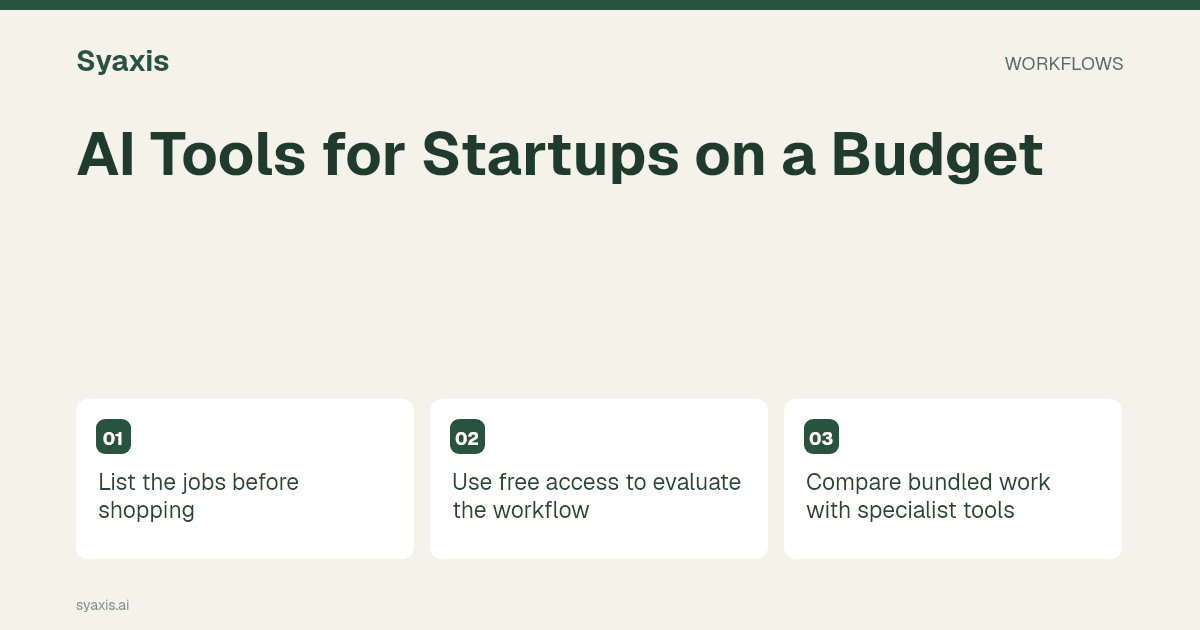
List the jobs before shopping
Write down the deliverables you create each month: customer summaries, product messages, investor updates, images or proposals. Separate occasional experiments from recurring needs.
Choose one representative task in each important category so you can compare tools fairly.
Use free access to evaluate the workflow
Try the task, a correction and the final export where available. Check what happens after introductory credits or free allowances are used.
Do not assume a free tier covers a production workload, and do not buy a higher plan solely because it lists more models.
Compare bundled work with specialist tools
A product that combines Chat, images and presentations may reduce handoffs. A specialist can still be worth keeping when it supplies a native integration or control you rely on.
Syaxis offers those capabilities with explicit plan limits. It does not replace every provider’s native app; compare plans against your own expected use.
Keep startup claims defensible
Use actual customer evidence, current metrics and clearly labeled assumptions in a pitch. AI can help structure the story but should not invent traction, testimonials or market estimates.
See client presentation structure and source verification before sharing a deck.
Buy around the bottleneck in a small team
A small team may need investor slides, customer replies and campaign assets in the same week. List those recurring deliverables before comparing subscriptions. Count the tools you would genuinely stop paying for, not every category an AI product mentions. A combined subscription can simplify work while still leaving a specialist requirement unmet.
Build a fictional monthly workload: two presentations, twelve customer replies and four campaign concepts. Check presentation caps, image credits, model access and branding on the plan you would use. Then run one complete assignment including review and export. If the free allowance ends halfway through the representative workload, compare the relevant paid plan rather than calling the workflow free.
| Budget question | Evidence | Avoid |
|---|---|---|
| What is repeated? | A month of actual deliverables | Buying for hypothetical future projects |
| What is replaced? | A service you can stop paying for | Counting overlapping features as savings |
| What slows completion? | Review and handoff time | Using generation speed alone |
よくある質問
Is one combined subscription always cheaper?
No. It helps only when the included workflows and allowances fit your workload. Compare total spend and necessary manual work, including any specialist products you still need.
Use the ChatGPT Plus value calculation for a specific subscription. Trial a sales deck as a real deliverable, and verify what a combined AI subscription would actually replace.
明確な要件から、伝わるプレゼンテーションへ。
考えをSyaxisに持ち込み、ストーリーと構成を整え、共有したくなるスライドにしましょう。